
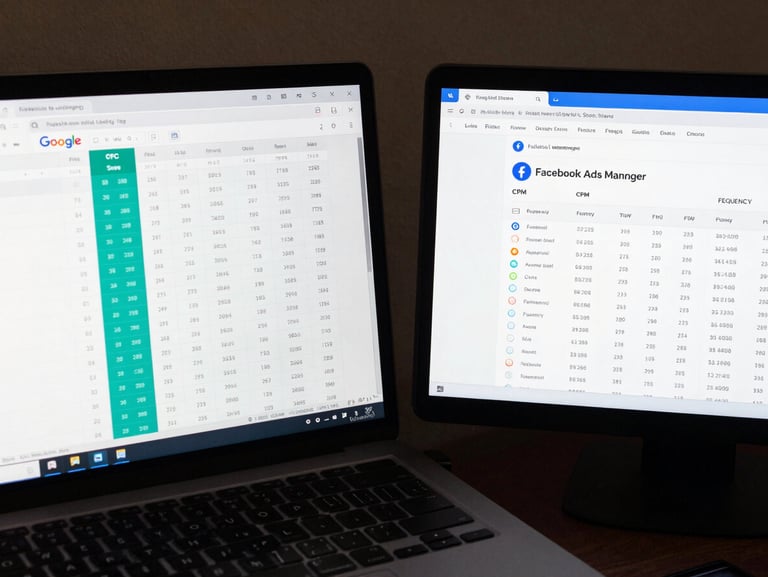
Two platforms. Two disciplines. One broken budget when you mix them up.
One channel captures people already searching. The other interrupts people who aren't. The bidding logic, audience mechanics, and conversion goals are different by design — not by interface.
Same budget line. Completely different math.
Google Ads — Demand Capture
Facebook Ads — Demand Manufacturing
Users aren't searching — you're interrupting them. The platform rewards creative relevance and audience signal, not keyword match. CPM, frequency, and scroll-stop rate are the real inputs. Fatigue kills campaigns faster than budget.
Users are already searching. Your job is to win the auction and own the click. CPC, Quality Score, and landing page relevance are the levers. Wasted spend lives in broad-match keywords and weak negative lists.
Key metrics we track: Cost per conversion, conversion rate by keyword, impression share lost to budget.
Key metrics we track: Cost per acquisition, frequency cap by audience, thumb-stop ratio on creative.
Audit first. Funnel second. Spend third.
If the landing page can't convert or the funnel math doesn't work at current CPCs, we say so — before a single dollar moves to a live campaign.
01 — Account audit
02 — Funnel and landing page review
03 — Channel-specific build
Google campaigns are structured around intent signals and match types. Facebook campaigns are structured around audience segments and creative rotation. Each gets its own optimization schedule.
We pull historical data from both platforms and map actual spend to actual conversions. Wasted budget gets identified before we touch campaign settings.
Click volume is irrelevant if the page doesn't convert. We review destination pages against the campaign's conversion goal before building a single ad set.